
And Another Thing with Anitra: The Bonnet Debate Isn’t Really About Bonnets — It’s About Who Gets to Define Respectability
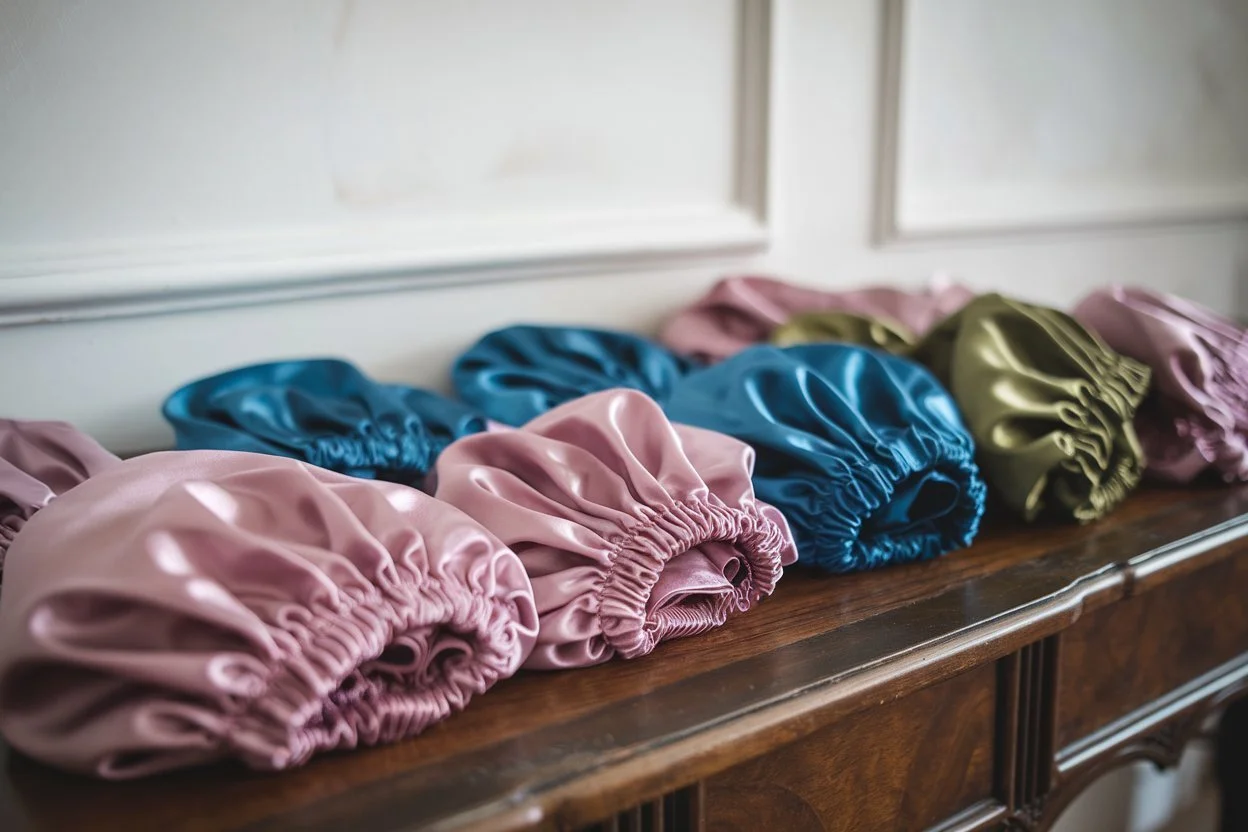

The conversation around Tuskegee University and its new no-bonnets or durags policy is not about the university telling students they cannot own a bonnet or a durag. It is not about someone being unable to wear one in their dorm room, at night, or in their personal space.
The discussion is about what students wear in shared university spaces — classrooms, academic buildings, the cafeteria, the library, and other public-facing areas of campus. Tuskegee, like many private institutions, has established expectations about student appearance and presentation.
And legally and practically, a private university has the authority to create standards for its campus culture. If a student chooses to attend, they are choosing to participate in that institution’s environment.
I will be honest. The idea of an HBCU having to enact such a policy is foreign to me. I attended an HBCU from 1991 to 1995, and baby, the yard was a fashion show.
We got dressed to walk across campus. Hair done. Makeup on. The latest styles. Accessories. Even heels, if needed to complete the look, just to go from one building to another, eat in the cafeteria, or sit in a biology lab dissecting pigs.
In hindsight, we might have gone a little overboard. But we loved it. Not because we were trying to convince white America that we were worthy. We were not performing for outsiders. We did it because we were in a space built for us, surrounded by people who looked like us, understood us, and celebrated us. The HBCU yard was about pride. It was about seeing each other shine. There has always been a tradition of presentation, excellence, and carrying yourself in a certain way on HBCU campuses, and quite frankly, in the Black community in general.
So if Tuskegee or any other private institution feels the need to enact a dress code to reinforce a standard that is a part of tradition, I don’t see a problem with that.
But we also need to be honest about where this conversation about bonnets has gone wrong. It’s not new. Black women have been getting chastised and vilified for wearing bonnets in public since the very first unknown, unnamed Black woman decided she was going to keep hers on while walking in public — Bonneting while Black.
A university dress code or a workplace standard is one thing. A stranger judging a Black woman in a grocery store because she is wearing a bonnet is something completely different. Outside of a university’s rules or professional standards in a workplace, what exactly are we policing? Why does seeing a Black woman in a bonnet in the produce aisle of a supermarket bother people, particularly other Black people, so much? I hear you. You don’t like it. You think it’s tacky. But how is it harming you? And what are we assuming about her? That she is lazy? That she does not care about herself? That she represents something negative about Black people?
What if that woman is dealing with depression? What if she has not had the emotional energy to do her hair in weeks, but she still managed to get her children to daycare and make sure there is food in the house?
Are the people judging her offering support? Paying for therapy? Offering a helping hand? Of course not. They are simply passing judgment. And, well, that’s easy and absolutely useless. How can I put this? If all you have to offer is criticism, shut up.
What if she is wearing that bonnet because she wants to protect her hair, preserve her curls, or simply does not care what strangers think? You might not like it. But what can you do?
Here’s the truth, the deeper issue, and my fundamental problem with this debate. The criticism lodged at Black women who wear bonnets in public is tangled with respectability culture — the idea that Black people must constantly monitor ourselves because one Black person’s appearance or actions will be used to judge the entire community. Anyone who says otherwise is lying, and I will tell them so to their face. There is no other reason to have a problem with a woman you don’t even know wearing a bonnet in space you neither own nor control. If you are going to look down at Black women who wear bonnets in public, at least be honest about the why.
And let’s be clear: people who want to stereotype Black people do not need a satin bonnet as evidence.
They will find a reason.
Black people have worn suits, earned doctorates, led companies, served in government, and achieved extraordinary things, and racism did not disappear because we looked “respectable.” Respectability has never been a shield against prejudice. Black women have, with grace and power, served as First Lady of the United States and as Vice-President of this country. I have never seen either of the beautiful Black women I referenced above looking any way but stunning, and they still can’t catch a break from the folk that just don’t like Black women or Black people for that matter. Are you seriously out here in 2026 thinking Brenda in a bonnet is the problem?
Hold up, don’t come for my neck. I am not saying standards do not matter. They do. Presentation matters. Professionalism matters. There is value in choosing to show up prepared and polished.
There is also value in minding your business.
And the bonnet or durag on someone else’s head is not my business. I am not saying let’s have National Bonnet Day. I am saying there is a difference between encouraging excellence and feeling compelled to police someone else’s humanity because you are bound by other people’s expectations of the collective “respectability” of Black people. It’s a hard “no” for me. That is something I will not do. Sorry. Not sorry.
Tuskegee setting a campus expectation is one conversation. Turning your nose up at a Black woman running errands in a bonnet is another.
I don’t know about the rest of y’all. But I don’t have the time or inclination to look down on my sister because she wore her bonnet in public, not when we have real issues facing our community that bonnets will not solve.
Do you think bonnets had anything to do with the 95,000 Black women who lost their civilian government jobs in 2025? More broadly, Black women lost 251,000 to 319,000 jobs in 2025 across the U.S. economy. Wonder what role bonnets played in that? In the first quarter of 2025, Black women earned 89 cents for every $1 earned by white women. And Black women working full-time, year-round earn 66 cents for every $1 earned by white men. Those damn bonnets! Black women are more than three times as likely to die from pregnancy-related causes than white women. In 2024, the maternal mortality rate for Black women was 44.8 deaths per 100,000 live births, compared to 14.2 for white women. Now listen, if burning bonnets would save the lives of Black women in childbirth, I would be the first one to light a match. But it won’t.
So yes, everyone is entitled to an opinion. You don’t have to like bonnets in public. But let’s not act like a piece of satin is even close to being one of the greatest problems facing Black women.
And one more thing.
I own a bonnet. I wear one to protect my hair when I need it. Now, have I personally ever walked into a public space wearing one? No, I can’t think of one time that I have. But that’s my choice. Funny part about personal freedom and autonomy is that no one has to make the same choices I make.
With that said, never say “never.” So if you ever see me out in public wearing a bonnet, maybe I am tired. Maybe I am overwhelmed. Maybe it’s an emergency. Or maybe I decided, “Today, I am wearing my bonnet in these streets, and I do not care what anybody thinks.”
Either way, understand this: it is probably not the day you want to stop me and offer your unsolicited opinion about my appearance.
Before we judge what somebody has on their head, maybe we should consider what they might be carrying on their shoulders.
Bonnet or no bonnet, Black women are not asking for permission to exist, and they don’t have to care about your criticism — even when it comes from other Black folk. Sometimes they are just trying to make it through the day. So, maybe we need to normalize grace . . . and minding your own business.