
Somebody Has to Say It: Race, Power and Keeping the Narrative of Black Corruption Going
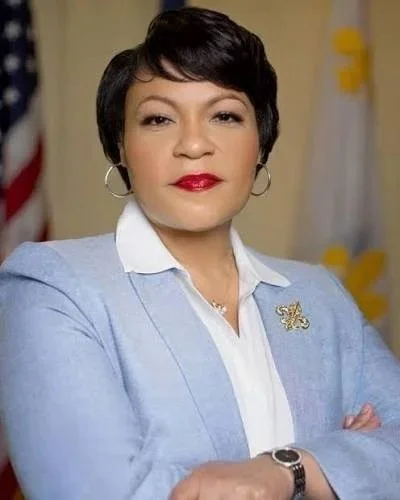
We will not pretend we don’t see what’s happening.
What is unfolding around former Mayor LaToya Cantrell right now is not about new information, new violations, or even new concerns. It is the rehashing of old, already-scrutinized issues, repackaged and amplified to keep a narrative alive. And yes—somebody has to say it—this is about race, about power, and about making Black leadership in this city and this state constantly fight to justify its very existence.
Let’s start with the facts.
Back in 2020, questions around Cantrell’s spending on image consulting, presentation and related expenses—were thoroughly scrutinized. Yes, there was an ethics investigation. The outcome? No criminal charges. No formal legal penalties. No ruling that the spending was illegal. That matters. Because when something has already been examined and does not result in a legal finding, bringing it back years later is not about accountability. It is about optics and narrative control.
It moves beyond policy and governance into something far more troubling like . . . well like dissecting Facebook photos. What are we doing here? We are analyzing rings on her fingers. We are counting bottles of wine and beer. This is not serious oversight. This is selective scrutiny.
And selective scrutiny is never neutral. In fact, one would think Louisiana politicians never set foot in an airport to travel anywhere before Latoya Cantrell. Because here’s the part folks don’t want to say out loud: this level of microscopic, personal, and persistent examination is never applied evenly.
Let’s take Gov. Jeff Landry.
There were documented ethics concerns tied to campaign-related spending during his time as attorney general—issues that were addressed within the system, resulting in administrative outcomes at most, not criminal escalation. So, let’s talk facts. When Jeff Landry used campaign funds to pay $11,600 for his personal car note, the ethics board said it was improper. But because the statute of limitations had expired, nothing happened—no penalties, no intense media scrutiny that framed him as corrupt and unscrupulous. ZERO CONSEQUENCES. So, we know what real violations look like and how they’re handled. REPEAT: The ethics board said it was wrong for Jeff Landry to use campaign funds on his car note—and still, nothing happened.
Let’s not pretend every issue gets treated the same.
There is more. In a multi-year pattern of behavior, Gov. Landry accepted nearly $13,000 worth of donor-funded travel while serving as attorney general, including private flights, and failed to disclose those trips as required by state ethics law. This is not speculation—it resulted in a formal ethics charge in 2023 and ultimately a settlement with a fine. This wasn’t a technicality. The law explicitly requires disclosure of “things of value,” including transportation provided by donors. Despite the seriousness of that violation, it barely registered in the political narrative during his run for governor. Sure, it was mentioned by a mainstream media outlet or two during his gubernatorial campaign. But it was only made public about a month before the end of the campaign. And it definitely was not treated with the same wall-to-wall scrutiny that Black elected officials have historically and consistently faced. Let’s not forget that former New Orleans mayor Ray Nagin’s free trips became part of a federal case and a prison sentence. Meanwhile, as best as we can tell no one even bothered to investigate whether Landry’s free travel was tied to any quid pro quo. One set of travel becomes a corruption case. Another set of travel is handled as a “sloppy disclosure,” where Landry ultimately pays a $900 fine, discloses the trips, and moves on politically, ascending to the governor’s mansion without that violation ever defining his tenure as governor. If we weren’t mentioning it right now, literally no one would be talking about it.
Meanwhile, Cantrell was formally charged with a state ethics violation over first-class flight upgrades paid with city funds. After the Ethics Board made clear it was a violation, she paid the money back in full. Same system. Same kind of finding: you received something of value you weren’t entitled to. But here’s where the difference becomes impossible to ignore. Landry’s case is a footnote—something handled, settled, and politically absorbed—while Cantrell’s repayment did not close the book. The scrutiny didn’t ease; it intensified. The conversation lingered, expanded, and became a constant drumbeat as her political enemies, the mainstream media and ordinary citizens continued to hound her in search of dirt.
The contrasts aren't about the facts of the violations—it’s about who is allowed closure and who is denied it. One pays a fine and ascends to the Governor’s mansion. The other pays the money back and still stands trial in the court of public opinion every single day. A white man can rack up thousands in undisclosed donor perks, settle the matter quietly, and still ascend to the highest office in the state without it defining him. Jeff Landry gets to rule Louisiana. Three months after she is no longer mayor, the media and the court of public opinion won’t let LaToya Cantrell be at peace in her own home. That’s not accountability—that’s disparity.
And around here, we call a thing a thing. It is racism operating through political and media systems that decide who gets grace and who gets crucified. Because the same place that shrugged at undisclosed donor-funded luxury travel is the same place that won’t let a Black mayor exist in her own home without controversy. The same media ecosystem that downplayed Landry’s ethics violations has been eager to sensationalize Cantrell’s every move. At some point, we must stop pretending this is about ethics alone.
It’s about who is allowed to be flawed, who is presumed guilty, and who is given the benefit of the doubt. And in Louisiana, that line still too often falls along race.
Because no one else will do it, and somebody must, we will ask the obvious question: Why is it that some issues are handled as “routine ethics matters” — fines, corrections, and moving on — while others are elevated, stretched, and repeated until they resemble something far more sinister?
Why is it that one leader gets a process, and another gets a perpetual prosecution in the court of public opinion? If we are not willing to interrogate that difference, then we are not having an honest conversation. Because the truth is, what we are witnessing is not just about one mayor or one moment. It is about a pattern — a pattern where Black leadership is subjected to heightened scrutiny, extended narratives, and personalized criticism that goes beyond policy into presentation, appearance and lifestyle.
Now let’s be clear: accountability matters. No one is arguing that elected officials should be above the law. But accountability must be consistent. It must be fair. And it must be rooted in facts—not recycled insinuations.
What we are seeing right now fails that test.
When old issues that did not result in violations are brought back years later . . . when the conversation shifts from governance to jewelry . . . when standard campaign practices are framed as scandal . . . that is not accountability. That is amplification with an agenda.
And yes—this is about race.
By the way, we also need to talk about the role of mainstream local media in all of this—because they are not just observers, they are participants. The same outlets that are quick to amplify recycled controversies, to dissect photos, and to stretch minor issues into multi-day storylines are often the very ones helping to set the narrative in the first place. That is not neutral coverage—that is editorial influence disguised as reporting. When headlines repeatedly center speculation, optics, and personality over substance, they don’t just inform the public—they shape what the public is told to care about. And when that pattern consistently falls harder on one leader than another, that is not coincidence. That is a choice.
So, let’s call this what it is. This is about power, perception, and yes, race. If the same standards were applied across the board, we wouldn’t be here—revisiting old stories, dissecting personal details about LaToya Cantrell, pretending it’s all about accountability, while Gov. Jeff Landry backs legislation to take over New Orleans and pushes a culture war against immigration.
Here in New Orleans, we should be talking about policy, progress and outcomes. Instead, we’re talking about rings.
And that tells you everything you need to know.
Somebody has to say it.