
Diamond Jubilee, Heavy Burden: Amistad at 60 Still Holds the Black Story Together
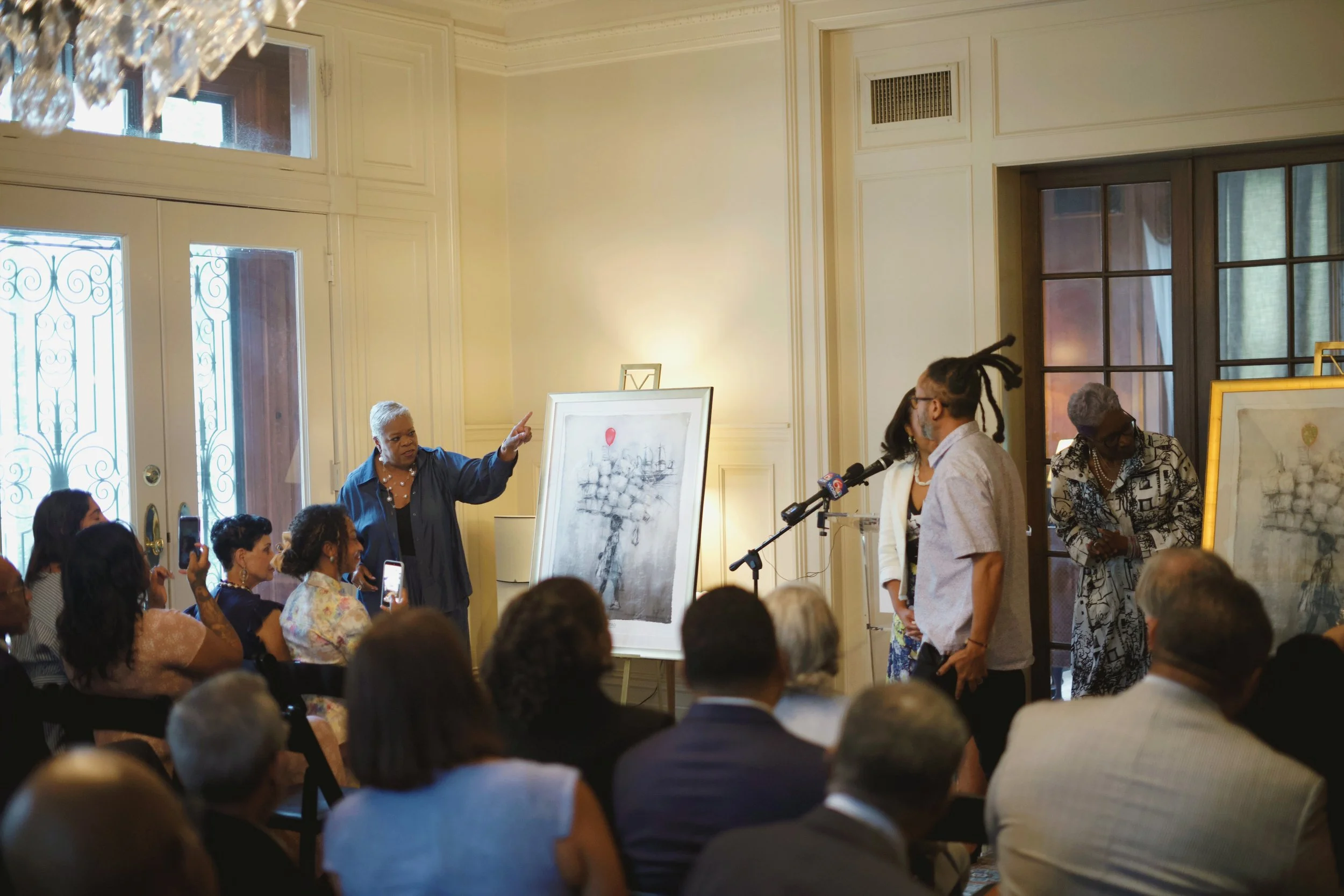
Kathe Hambrick, executive director of The Amistad Research Center unveils commemorative poster celebrating the repository’s 60th anniversary.
By Danielle Coston/The New Orleans Tribune
For 60 years, Amistad Research Center has stood as one of this nation’s most important keepers of Black memory — preserving the letters, photographs, oral histories, art, and documents that tell the truth of who we are, where we have been, and what we have overcome. Founded in 1966, Amistad today houses roughly 15 million archival holdings and remains the nation’s oldest and largest independent archive dedicated to African American history and the broader stories of marginalized communities.
That alone is worth celebrating. And a host of community leaders, cultural partners, and special guests connected to the Amistad’s legacy and collections did just that Wednesday (May 7) at press conference at Tulane University's President’s House.
The milestone event also include the unveiling of The Amistad Research Center’s official 60th Anniversary Commemorative Poster by New Orleans artist Ayo Scott, along with announcements regarding upcoming anniversary programming and culminating celebration later this year.
But anniversaries are not only moments for applause. They are moments for honesty.
And the truth that while Amistad marks its diamond jubilee, it does so in an era that has become increasingly hostile to the preservation of Black history. Across the country, Black museums, archives, and cultural repositories are facing steep financial pressures, shrinking public support, shifting philanthropy, and political attacks on the very work they were built to do — document truth, preserve heritage, and protect legacy. Amistad has not been spared. Federal funding cuts reportedly stripped away a significant portion of its operating support, forcing layoffs, limiting services, and slowing acquisitions at the very moment demand for its collections remains strong.
That should concern everyone. Because institutions like Amistad are not luxuries. They are necessities.
Without them, the papers of giants like Zora Neale Hurston, Fannie Lou Hammer, Langston Hughes and generations of Black organizers, educators, artists, and ordinary citizens become vulnerable to neglect, disappearance, or erasure. Without them, history is left in the hands of those who too often sanitized it in the first place.
And yet, Amistad remains.
Still standing. Still collecting. Still teaching. Still opening its doors to scholars, students, journalists, filmmakers, and community members searching for truth in original documents rather than rewritten narratives. Still asking urgent questions about ownership of Black stories in the digital age — even hosting national conversations around who controls Black data, Black archives, and Black intellectual legacy.
That endurance says something powerful.
It says this community understands that preserving Black history is preserving Black power.
At 60, Amistad is a treasured institution worthy of praise and protection. Because if New Orleans understands anything, it is that culture does not survive on sentiment alone. It survives because somebody fights to keep it alive.
For six decades, Amistad has carried that fight.